OK, So You Have Your Very First NDIS Plan... What Next?
Published: 8 October 2026
Congratulations!
Receiving your very first NDIS plan is a huge milestone. After all the meetings, paperwork, assessments, and waiting, you've finally got your plan in hand. But then comes the question almost every new participant asks:
"Great... I have my plan. Now what?"
If you're looking through pages of funding categories, budgets, and unfamiliar terminology, you're not alone. For many participants and families, receiving the plan feels like crossing a finish line, only to discover it's actually the starting line.
The good news? You don't need to figure everything out all at once.
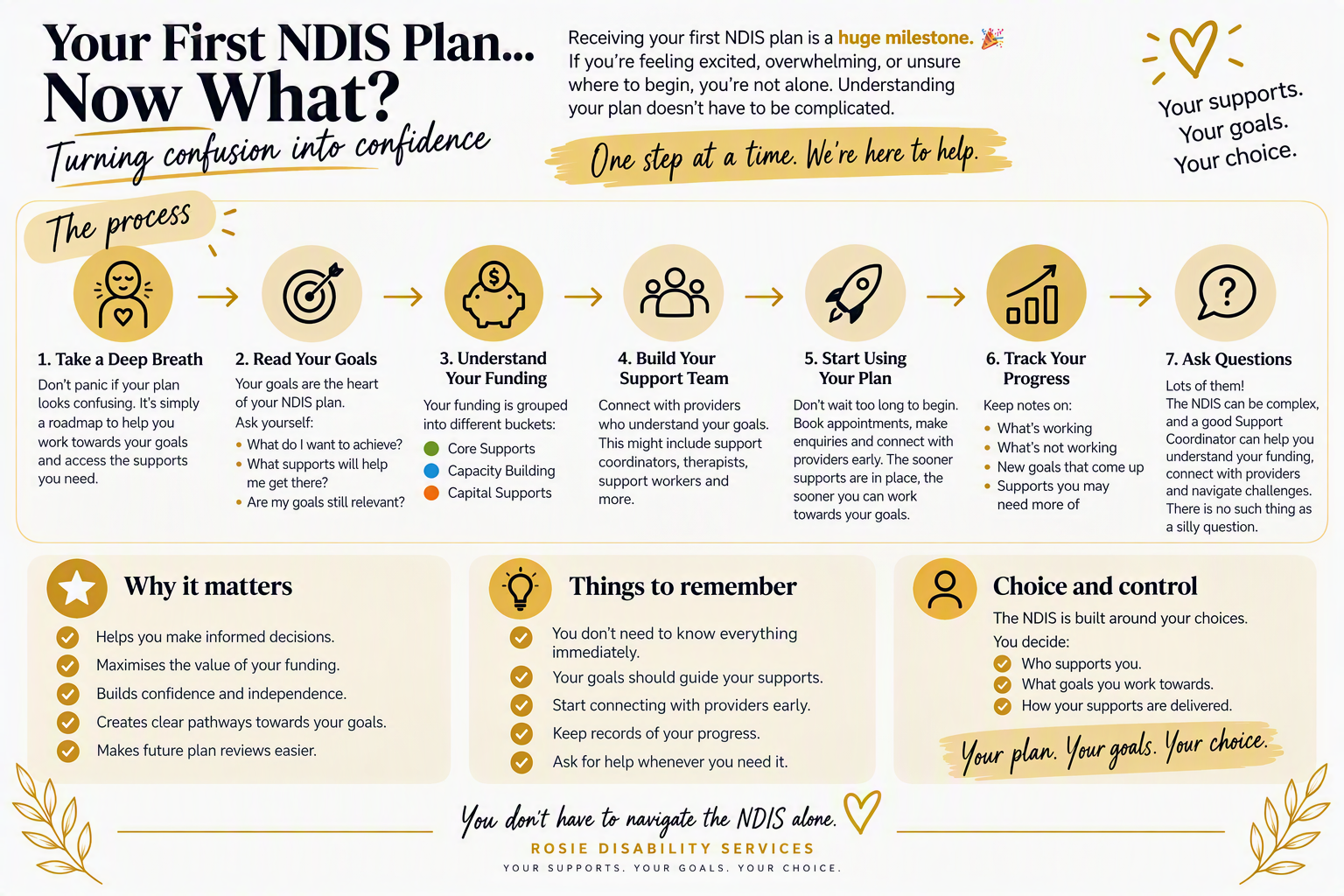
Step 1: Take a Deep Breath
First things first, don't panic if your plan looks like it's written in another language.
Terms such as Core Supports, Capacity Building, and Capital Supports can feel overwhelming when you're seeing them for the first time.
Remember, your NDIS plan is simply a roadmap. It's designed to help you access the supports you need and work towards the goals that matter most to you.
You don't need to become an NDIS expert overnight.
Step 2: Read Through Your Goals
Your goals are the heart of your NDIS plan. Everything within your plan should connect back to helping you achieve these goals.
Ask yourself:
✔ What do I want to achieve?
✔ What supports will help me get there?
✔ Are these goals still relevant to me?
Whether it's increasing independence, building life skills, improving communication, participating in the community, or maintaining wellbeing, your goals help guide the supports you choose.
Tip: If you're unsure why a support has been funded, start by looking at how it links back to your goals.
Step 3: Understand Your Funding
Think of your funding as being placed into different buckets.
Core Supports
These supports help with everyday activities and daily living.
Support workers
Community access
Assistance with personal care
Consumables
Capacity Building Supports
These supports help you build skills and increase independence.
Occupational Therapy
Speech Pathology
Psychology
Support Coordination
Employment supports
Skill development programs
Capital Supports
These supports fund specialist equipment and modifications.
Assistive technology
Mobility equipment
Home modifications
Specialist disability equipment
Understanding what funding you have and what it can be used for helps avoid confusion later and allows you to make informed decisions.
Step 4: Build Your Support Team
Now it's time to gather your dream team.
Depending on your goals and funding, this team may include:
Support Coordinator
Support Workers
Occupational Therapist
Speech Pathologist
Physiotherapist
Psychologist
Recovery Coach
The best support teams don't just deliver services.
They listen.
They understand your goals.
They work alongside you to help achieve meaningful outcomes.
A good provider should work with you, not simply for you.
Step 5: Start Using Your Plan
One of the biggest mistakes many new participants make is waiting too long before accessing supports. It's understandable. The process can feel overwhelming.
However, the sooner supports are in place, the sooner progress can begin.
Consider:
✅ Booking initial appointments
✅ Exploring provider options
✅ Requesting referrals
✅ Meeting with therapists
✅ Connecting with support workers
Small steps taken early can make a significant difference over the life of your plan.
Step 6: Keep Track of Progress
Your NDIS plan shouldn't sit in a drawer until review time.
Throughout your plan period, keep notes on:
What's working well
What isn't working
New goals that emerge
Changes in circumstances
Additional support needs
These observations become incredibly valuable when preparing for future plan reviews or requesting changes to supports. Progress doesn't always happen in big leaps. Often it's the small wins that tell the most important story.
Step 7: Ask Questions
Lots of them! The NDIS can be complex, and nobody expects you to know everything.
Support Coordinators are here to help participants:
✔ Understand funding categories
✔ Connect with quality providers
✔ Navigate challenges
✔ Build confidence
✔ Increase independence
✔ Provide Support, information and guidance to make informed decisions
There is no such thing as a silly question.
Asking questions helps ensure you're getting the most from your plan and making choices that align with your goals.
Why Support Coordination Can Help
Many participants feel unsure about where to begin once funding is approved.
A Support Coordinator can help turn a confusing plan into a practical action plan by:
Breaking down your funding
Exploring provider options
Coordinating supports
Building service connections
Monitoring progress
Helping navigate barriers
Most importantly, Support Coordination helps you build the skills and confidence needed to navigate your supports independently over time.
Final Thoughts
Receiving your first NDIS plan isn't the finish line.
It's the beginning of your journey.
Take it one step at a time. Focus on your goals. Build a support team that understands your needs. Ask questions whenever you're unsure.
With the right supports in place, your NDIS plan can become a powerful tool for creating greater independence, increased opportunities, and meaningful progress toward the life you want.
Remember:
Your Plan. Your Goals. Your Choice.
You don't have to navigate the NDIS alone.
Want to know more? Enquire below!